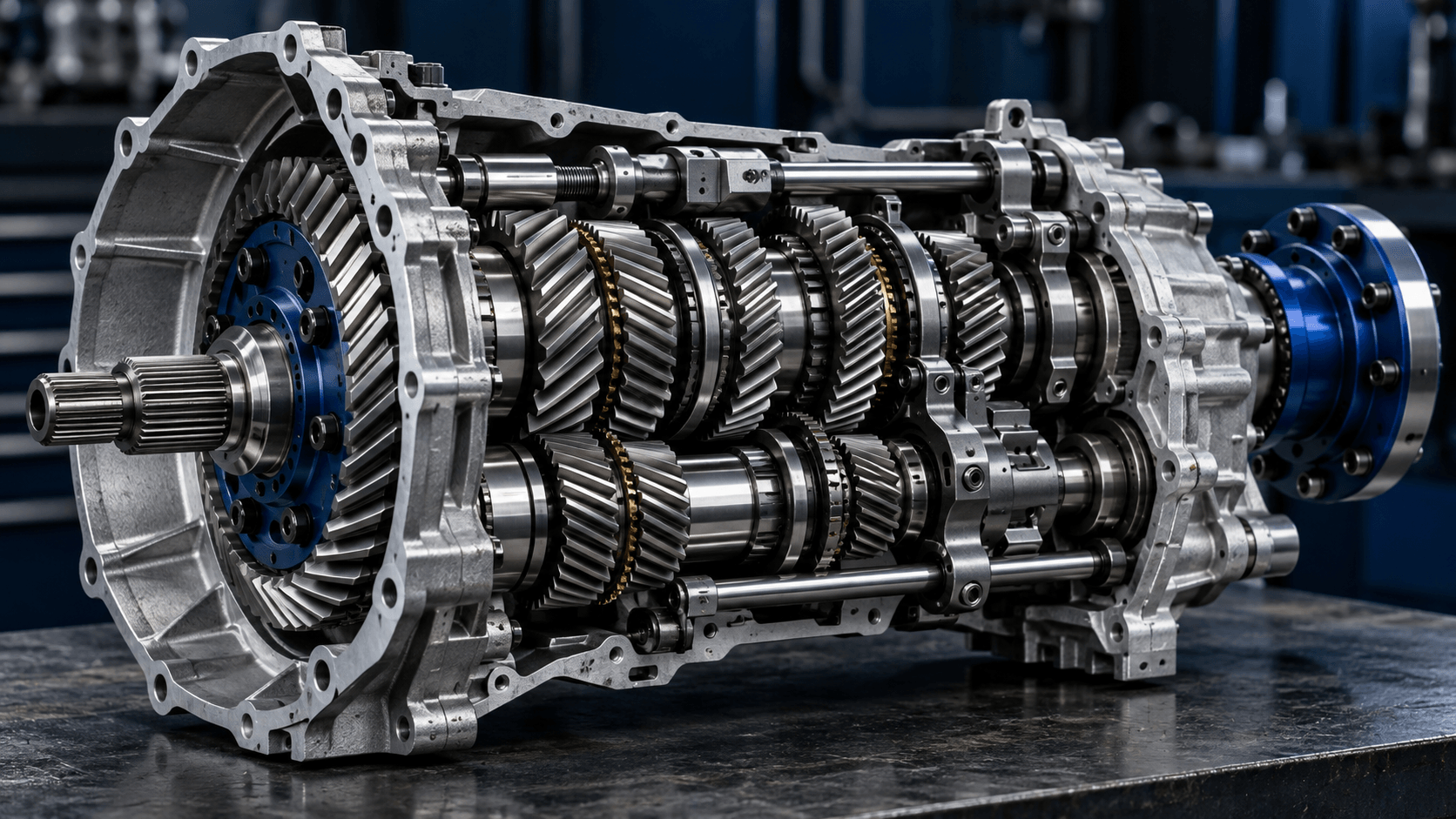
Derive the formula with units
Let n be engine rpm, R total reduction and D tire diameter in meters. Wheel revolutions per second are n/(60R); wheel travel per revolution is πD. Therefore v = nπD/(60R) in m/s. Every extra reduction stage multiplies R, while a true overdrive stage has a ratio below one.
v(m/s) = engine RPM × circumference(m) / (60 × overall reduction)Follow the worked comparison below for the input units and assumptions.
Work through an example
For n = 3,000 rpm, R = 4 and D = 0.6 m, wheel speed is 750 rpm. Circumference is about 1.88496 m, giving about 23.5619 m/s or 84.82 km/h.
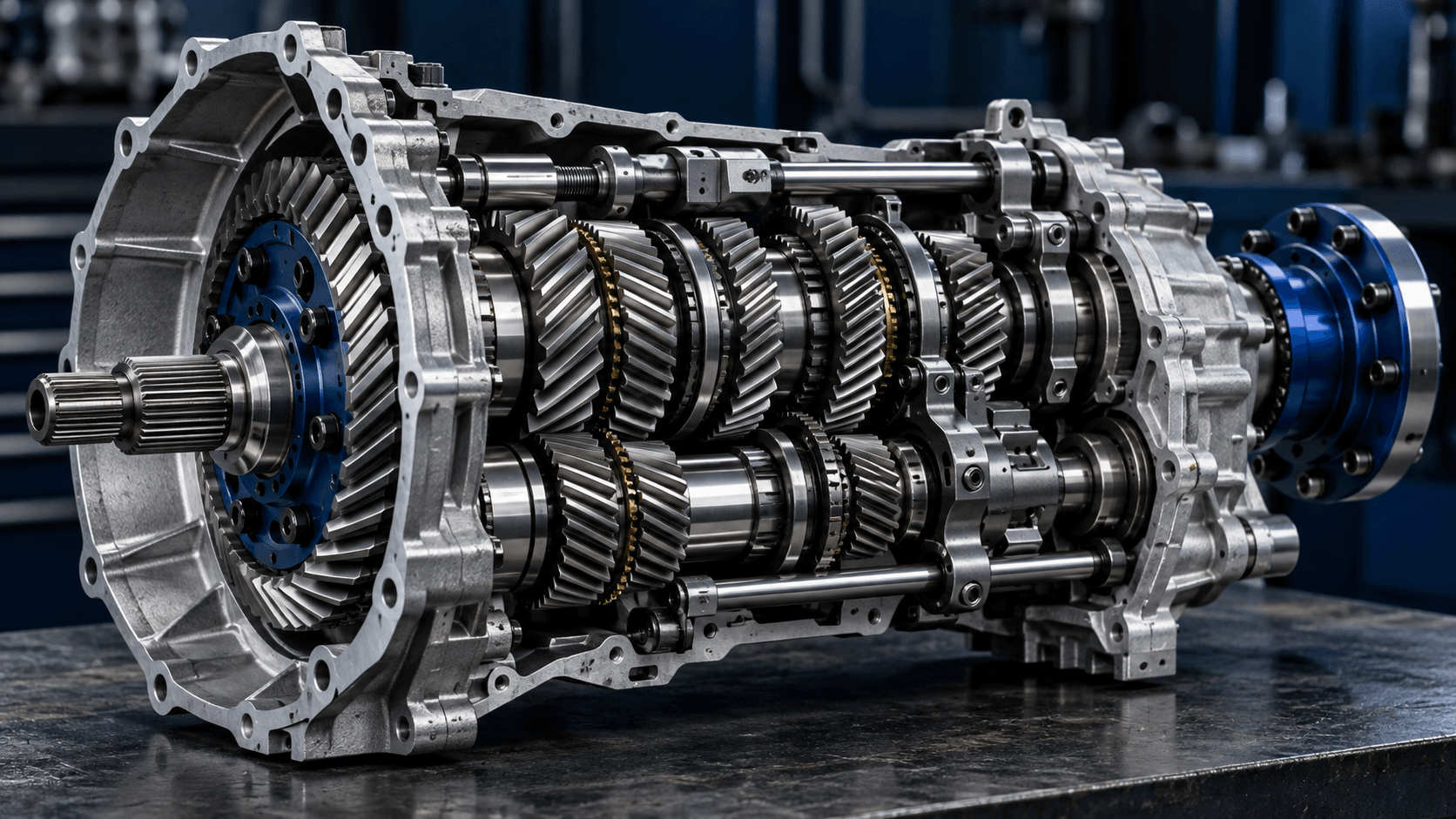
Use circumference directly when it is measured
If rolling circumference C is known in meters, use v = nC/(60R). You do not need to convert it back into a nominal diameter. Keep the measured-shaft definition attached to n so engine RPM is not confused with wheel RPM.
Solve backward only with consistent measurements
Rearrange the same relationship to calculate RPM or total reduction. Use synchronized engine RPM and independent road speed at a steady operating point. Variable converters and clutch slip can prevent a single fixed R from explaining the measurements.
Track the units through the road-speed equation
The example fixes engine speed at 3,000 rpm and tire diameter at 0.6 m while overall reduction changes. These are abstract values for checking the unit cancellation; they do not represent a particular vehicle or attainable speed.
v(m/s) = engine RPM × circumference(m) / (60 × overall reduction)- Convert diameter to meters before using v in meters per second, or use a measured circumference directly.
- Divide RPM by overall reduction to obtain wheel revolutions per minute.
- Multiply by circumference to obtain meters per minute, then divide by 60.
- Multiply meters per second by 3.6 for km/h, or divide by 0.44704 for MPH.
| Overall reduction (:1) | Wheel RPM | Speed (m/s) | Speed (km/h) |
|---|---|---|---|
| 3 | 1000 | 31.416 | 113.1 |
| 4 | 750 | 23.562 | 84.82 |
| 5 | 600 | 18.85 | 67.86 |
At 4:1, wheel speed is 750 rpm and theoretical road speed is approximately 84.82 km/h. Increasing reduction to 5:1 reduces the result by a factor of 4/5. The formula contains no mass, engine torque or drag term, so its output should not be presented as an acceleration or power-limited maximum-speed prediction.
Check the inputs before interpreting a difference
The circumference input already describes distance traveled per revolution. Multiplying it by π again is a common diameter/circumference mix-up. Confirm the measured shaft for the RPM input before applying any reduction.
Before you apply the result
The formula describes geometry at an operating point. It includes no force balance, so it does not solve for attainable top speed. Use loaded rolling circumference when precision matters and document the no-slip assumption.
Try the calculation
Enter your own values in the related calculators. Compare one input at a time and keep units and operating conditions visible with the result.
Frequently asked questions
What is the road-speed formula with tire diameter?
With diameter D in meters, engine speed n in rpm and overall reduction R, speed in m/s is nπD/(60R).
Can overall reduction be less than one?
A stage can be an overdrive with a ratio below one. Multiply every stage to determine the complete reduction.
Does the formula predict acceleration?
No. It relates rotational speed to travel and contains no force or power model.
How do I use measured tire circumference in the speed formula?
Use v = RPM × circumference/(60R), with circumference in meters for v in m/s. Do not multiply measured circumference by π; that step is only needed when starting from diameter.
Reference and method
Angular speed and tangential speed. Gear reductions follow tooth engagement and conservation of rotation count.
OpenStax — University Physics: rotation with constant angular acceleration ↗These explanations and examples describe the documented model. No manufacturer testing, named expert authorship or independent professional review is claimed. Read the method policy or report a correction.