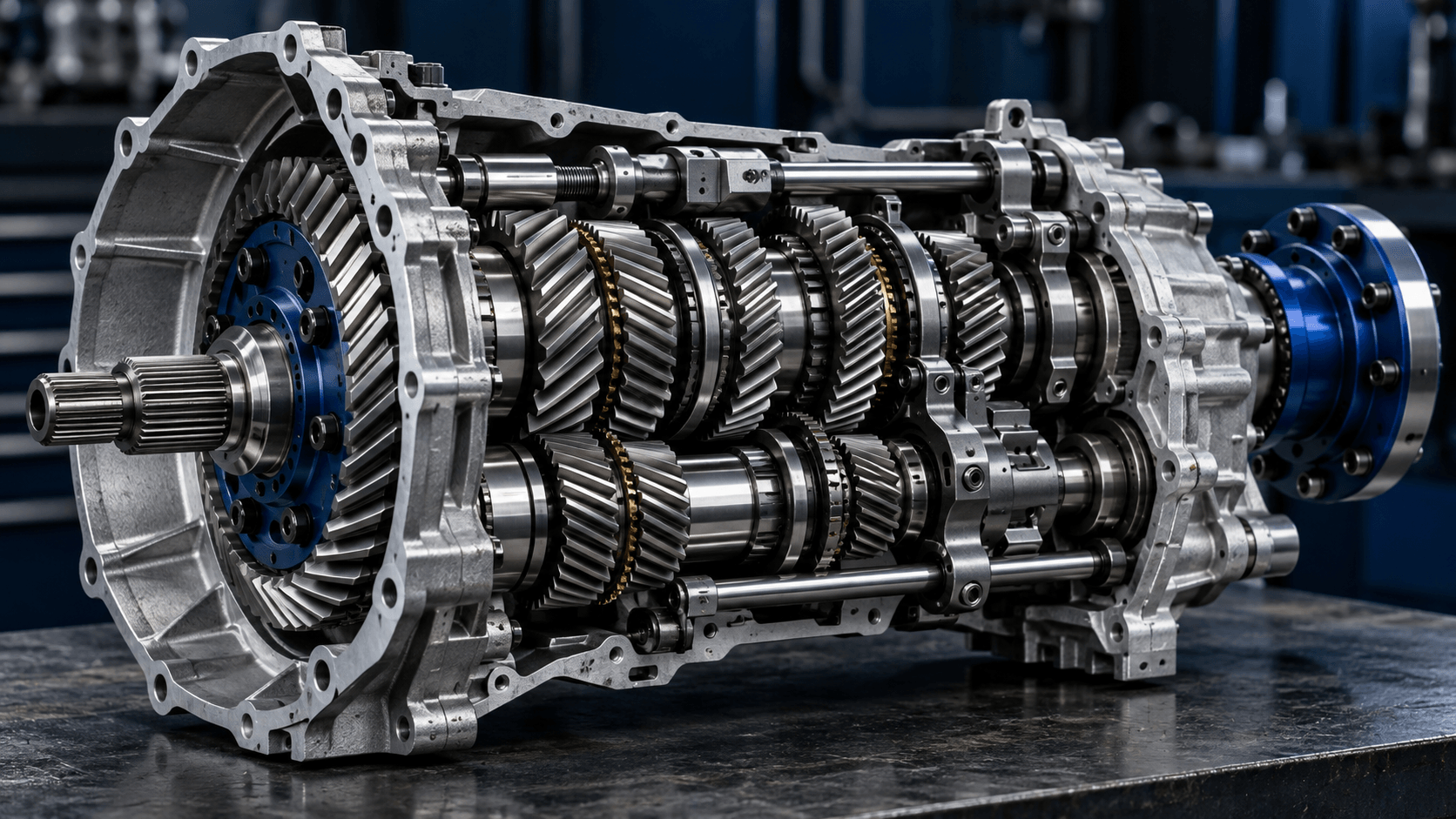
Name the stage before using the number
For a chain drive, divide rear teeth by front teeth. For a conventional axle gear pair, divide ring-gear teeth by pinion teeth. Multiply that final ratio by primary, transmission and any other reduction when calculating engine-to-wheel speed. Tooth count determines the ideal speed relationship, regardless of sprocket size labels.
Rfinal = driven teeth/driving teeth; Rtotal = Rgearbox × Rfinal × other stagesFollow the worked comparison below for the input units and assumptions.
Work through an example
A 41-tooth ring gear and 10-tooth pinion give 4.10:1. With a 0.75:1 transmission overdrive and no other stages, overall reduction is 3.075:1. Engine and wheel RPM therefore differ by 3.075, not 4.10.
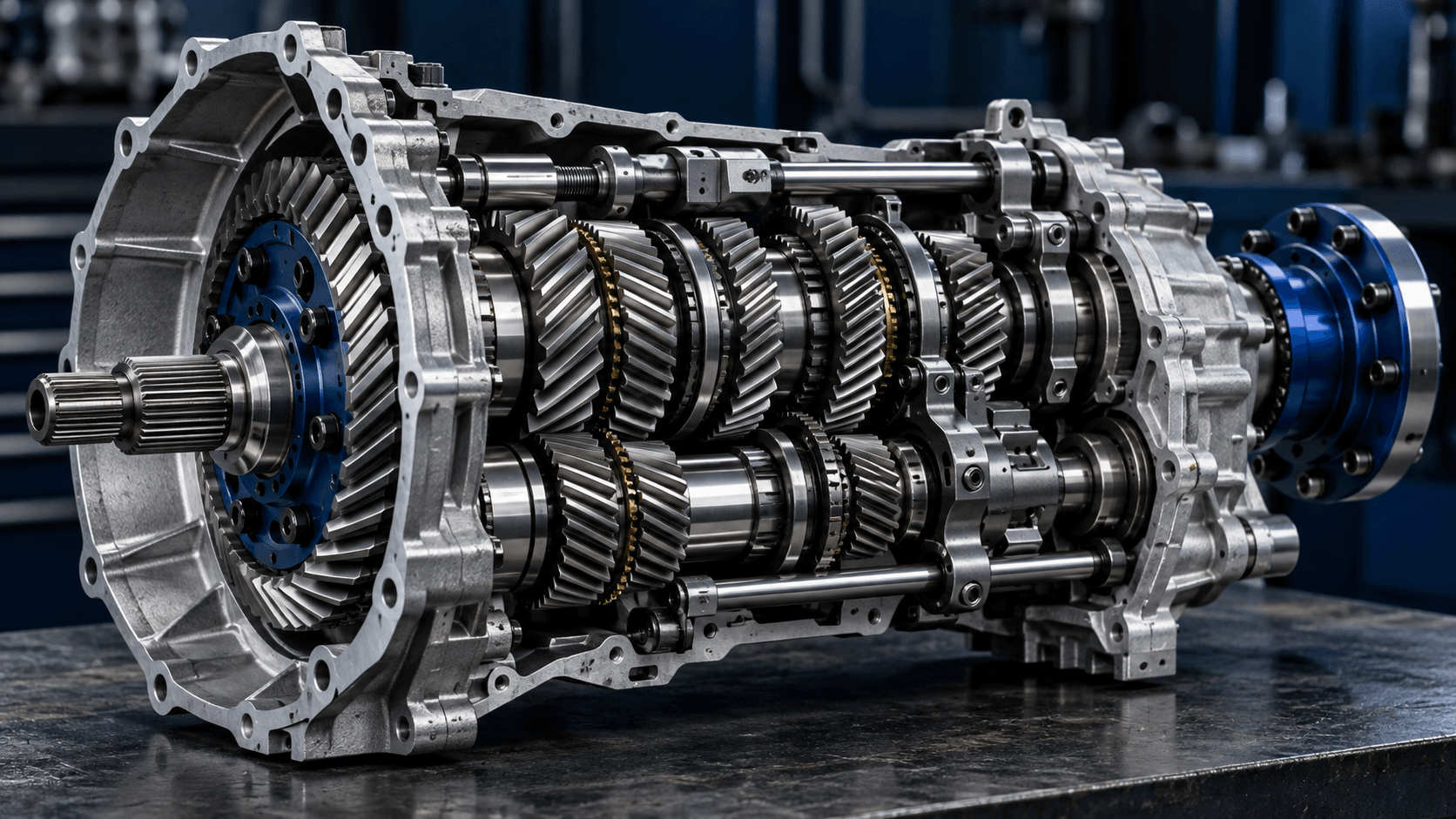
Separate the final stage from the gearbox
A 4.10 axle ratio multiplied by a 0.75 overdrive gives 3.075 overall when no other stages apply. Using 4.10 alone would overstate engine RPM in that gear. Keep a list of stages rather than relying on an unlabeled ratio number.
Use tooth counts for an exact geometric ratio
Divide driven teeth by driving teeth at each stage. A marketed rounded ratio can be convenient, but actual counts reveal the exact quotient. This precision describes speed relationships, not gear strength or drivetrain efficiency.
Compare a final-drive ratio with overall gearing
The following axle ratios use the same selected transmission overdrive of 0.75:1 and no other stages. This separates final reduction from the engine-to-wheel quotient needed for road-speed calculations.
Rfinal = driven teeth/driving teeth; Rtotal = Rgearbox × Rfinal × other stages- Identify whether the final stage is a chain pair or a ring-and-pinion set.
- Divide driven teeth by driving teeth, retaining the actual quotient when counts are known.
- Multiply by the selected gearbox ratio and any other reduction stages.
- Use overall reduction, rather than final drive alone, when converting engine RPM to wheel RPM.
| Final ratio (:1) | Selected gear (:1) | Overall reduction (:1) | Wheel RPM at 3,000 |
|---|---|---|---|
| 3.5 | 0.75 | 2.625 | 1142.86 |
| 4.1 | 0.75 | 3.075 | 975.61 |
| 4.5 | 0.75 | 3.375 | 888.89 |
With a 4.10 final drive and 0.75 selected gear, overall reduction is 3.075:1. Applying 4.10 alone would overstate the engine RPM needed for a given wheel speed in that gear. A higher final-drive number is more reduction; words such as taller or lower should be accompanied by the actual numerical convention.
Check the inputs before interpreting a difference
A ratio describes rotational speed relationships and ideal torque multiplication. It does not establish tooth strength, efficiency, differential action or compatibility with a particular axle or chain system.
Before you apply the result
A final ratio alone cannot describe road speed without transmission ratio and rolling circumference. The calculation does not evaluate gear strength, differential behavior, losses or installation compatibility.
Try the calculation
Enter your own values in the related calculators. Compare one input at a time and keep units and operating conditions visible with the result.
Frequently asked questions
How is a ring-and-pinion ratio calculated?
Divide ring-gear teeth by pinion teeth. A 41-tooth ring and 10-tooth pinion give 4.10:1.
Is a higher number taller gearing?
A higher numerical reduction gives less wheel speed per engine revolution. Terms such as taller and shorter can be ambiguous, so state the number.
Does final drive include transmission gear?
Final drive names the last stage. Multiply by the selected transmission ratio for an overall speed calculation.
Does an overdrive gear cancel the final-drive ratio?
It multiplies it by a value below one rather than removing it. A 0.75 overdrive with 4.10 final drive produces 3.075 overall when no other stages apply.
Reference and method
Angular speed and tangential speed. Gear reductions follow tooth engagement and conservation of rotation count.
OpenStax — University Physics: rotation with constant angular acceleration ↗These explanations and examples describe the documented model. No manufacturer testing, named expert authorship or independent professional review is claimed. Read the method policy or report a correction.