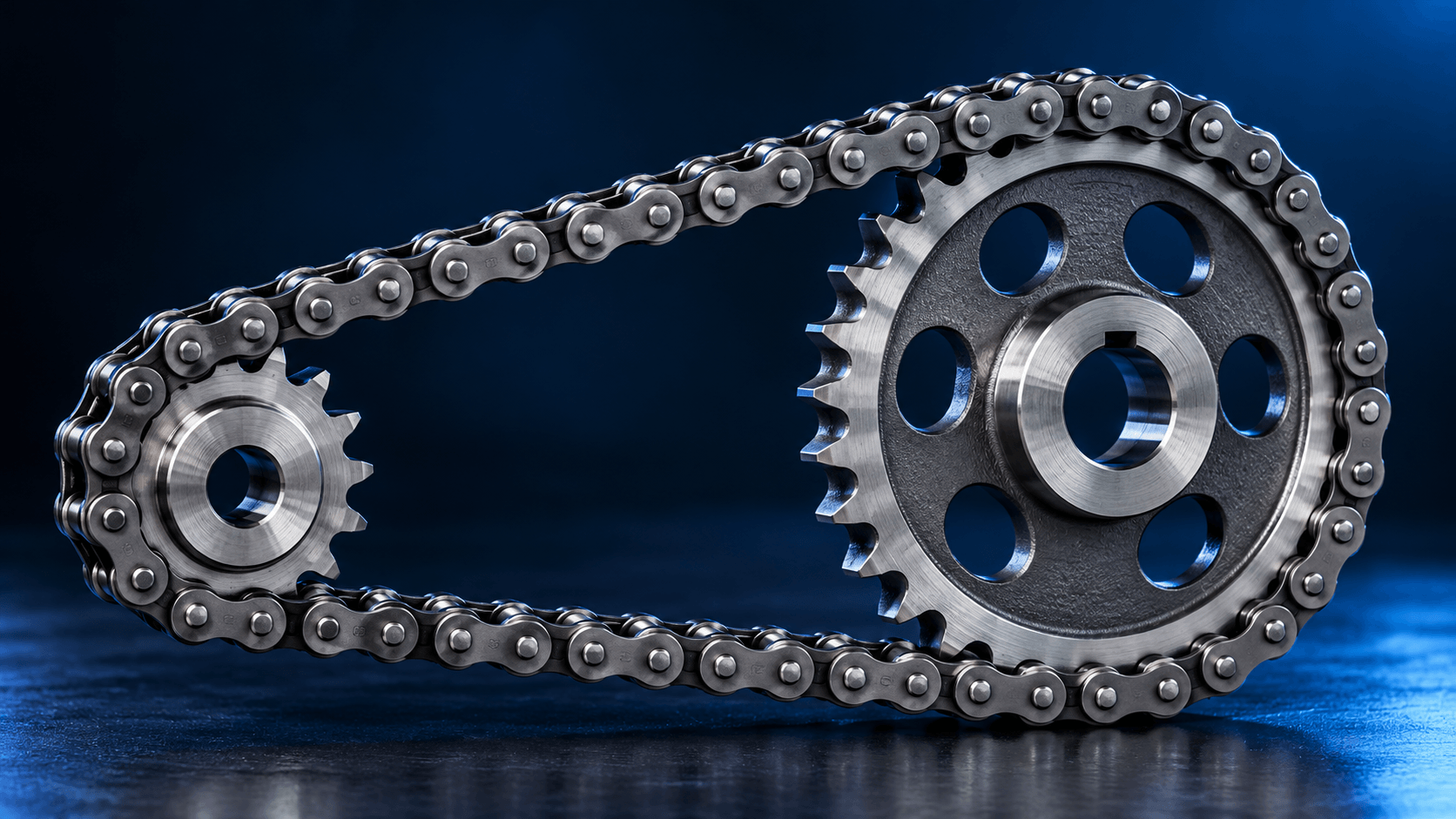
Measure and identify the chain
Confirm markings and manufacturer dimensions before replacing a chain or sprocket. Measure across multiple pitches and divide by the number of intervals to reduce ruler error. Do not count pin centers as intervals: eleven consecutive pin centers span ten pitches. Keep wear and elongation separate from nominal identification.
Nominal pitch = measured pin-center span / number of intervalsFollow the worked comparison below for the input units and assumptions.
Work through an example
Ten pitches of a nominal 0.375-inch chain span 3.75 inches before considering wear and measurement uncertainty. With a 12-tooth sprocket, one revolution advances 12 pitches, or 4.5 inches of chain on average.
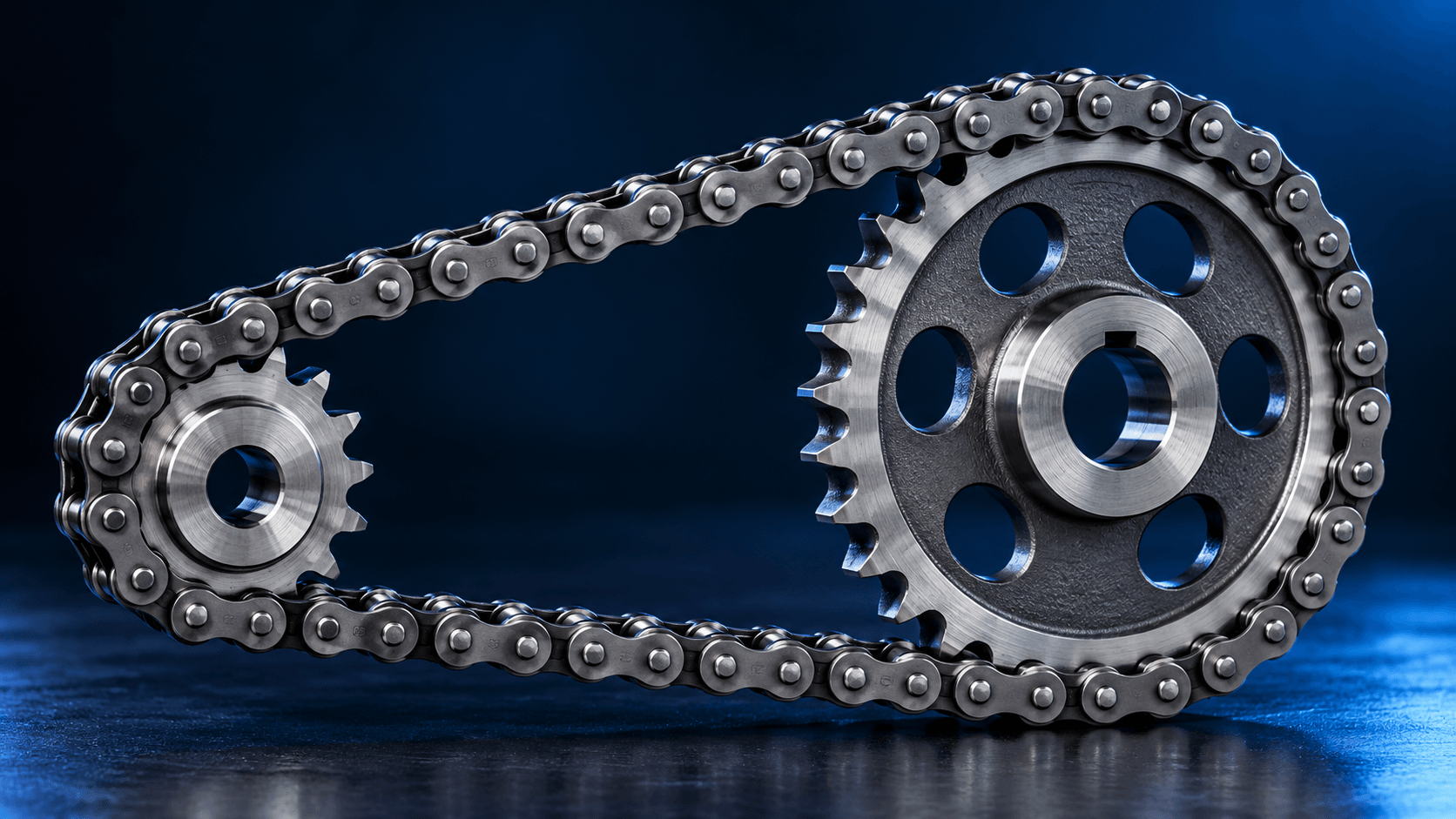
Separate pitch identification from chain-length selection
Pitch describes the spacing of neighboring pins. Chain length describes how many of those pitches make up the loop. Identify the chain specification first, then calculate length from both sprocket tooth counts and shaft spacing.
Measure multiple intervals carefully
Select two pin centers several pitches apart and count the spaces between them. Divide the measured span by that interval count. Keep the chain straight for the measurement and compare with nominal manufacturer dimensions; wear can make the measured span longer.
Measure pitch without miscounting the pins
A pitch measurement spans the spaces between pin centers, not the count of visible pins. The table uses ten intervals, which require eleven consecutive pin centers. It illustrates nominal spacing only and does not specify a chain family, roller size, working load or wear limit.
Nominal pitch = measured pin-center span / number of intervals- Identify chain markings and the manufacturer specification before relying on a ruler measurement.
- Choose two pin centers several intervals apart and count the spaces between them.
- Divide the center-to-center span by the number of intervals to estimate pitch.
- Compare nominal pitch, width, roller dimensions and the specified sprocket tooth form separately.
| Nominal pitch (in) | Intervals | Nominal span (in) | Pitch (mm) |
|---|---|---|---|
| 0.25 | 10 | 2.5 | 6.35 |
| 0.375 | 10 | 3.75 | 9.524999999999999 |
| 0.5 | 10 | 5 | 12.7 |
For a 0.375-inch pitch, ten intervals span 3.75 inches in the nominal geometry. Counting eleven pins and dividing by eleven would give a smaller, incorrect pitch. Wear and measurement uncertainty can also make a real span differ from this ideal value.
Check the inputs before interpreting a difference
Pitch identification and chain-length selection are separate tasks. Identify the correct chain system first, then use both sprocket tooth counts and shaft center distance to estimate the number of pitches needed for the loop.
Before you apply the result
Matching pitch does not establish interchangeability. Chain guards, tension, alignment, sprocket condition and the component manufacturer’s application limits need separate attention. Use a length estimate as a starting point and confirm physical fit.
Try the calculation
Enter your own values in the related calculators. Compare one input at a time and keep units and operating conditions visible with the result.
Frequently asked questions
Does the same pitch mean two chains interchange?
No. Width, roller dimensions, tooth form and application limits also need to match.
How many pitches are between eleven pins?
Ten intervals. Dividing the span by eleven would underestimate pitch.
Does a longer chain change the gear ratio?
Not by itself. Tooth counts set the ratio; chain length and center distance determine the physical path and adjustment.
Can wear make a chain look like a different pitch?
Wear can increase the measured span, so a worn sample alone is an unreliable basis for nominal identification. Compare markings and documented dimensions rather than inventing a new nominal size from the measurement.
Reference and method
Two-sprocket chain approximation and even-pitch selection. Sprocket geometry is independently derived from the regular polygon chord.
Renold — Transmission chain installation & designer guide ↗These explanations and examples describe the documented model. No manufacturer testing, named expert authorship or independent professional review is claimed. Read the method policy or report a correction.