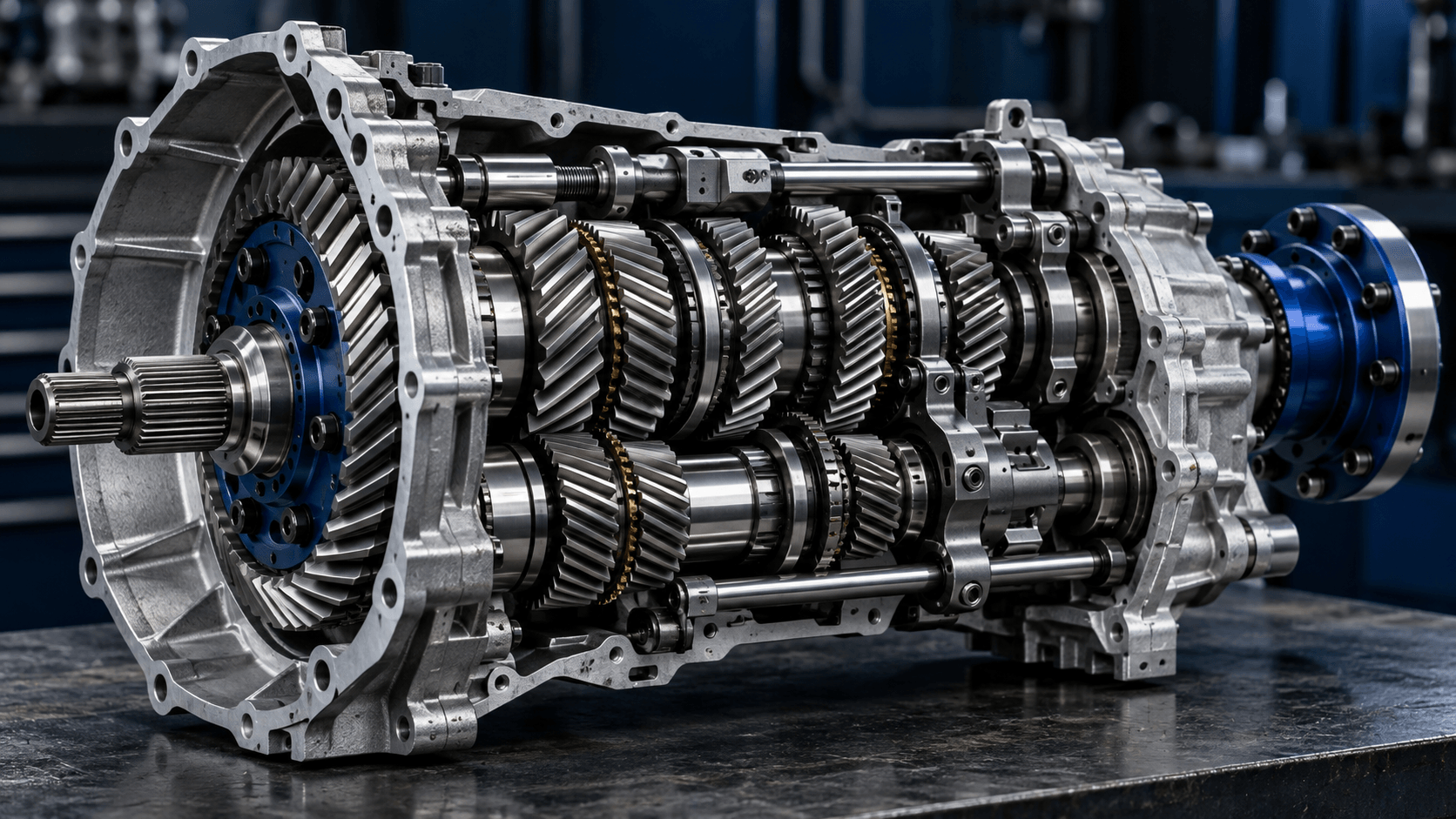
Use a complete conversion chain
Divide engine RPM by overall reduction for wheel RPM. Multiply by tire circumference in inches and by 60 minutes per hour, then divide by 63,360 inches per mile. This simplifies to MPH = RPM × circumference(in) ÷ (1,056 × R). With diameter rather than circumference, include π.
MPH = engine RPM × circumference(in) / (1,056 × overall reduction)Follow the worked comparison below for the input units and assumptions.
Work through an example
At 720 wheel rpm with a 13-inch tire, circumference is about 40.8407 inches. Multiplying 720 × 40.8407 / 1,056 gives about 27.85 MPH. Engine RPM is 3,600 if overall reduction is 5:1.
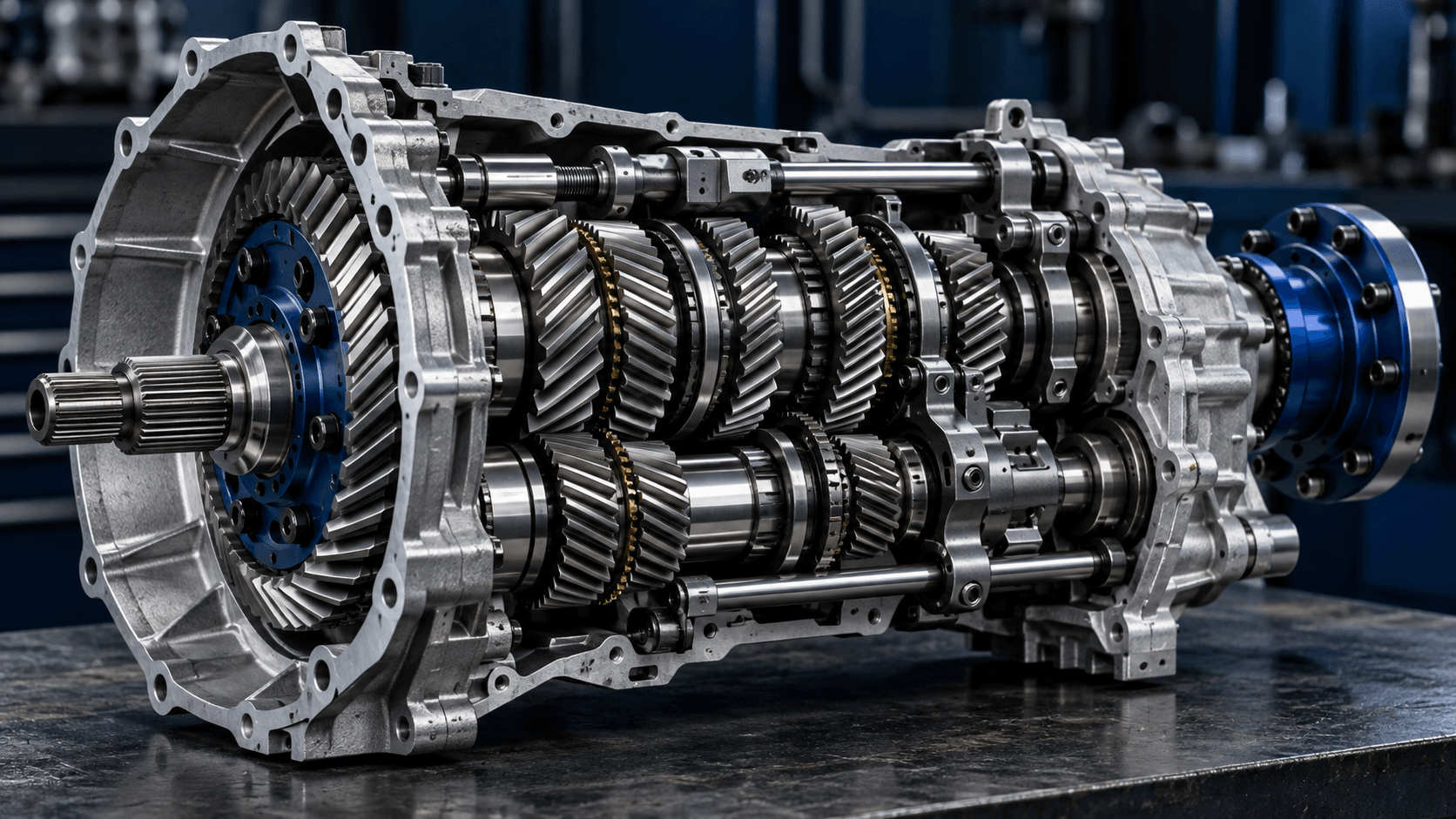
Choose the formula for the unit you actually have
For circumference in inches, MPH = RPM × circumference / (1,056 × R). For diameter in inches, multiply diameter by π first. The factor 1,056 comes from 63,360 inches per mile divided by 60 minutes per hour.
Identify which shaft the tachometer measures
If the input is already wheel RPM, use R = 1 for conversion from that wheel to travel. If it is engine RPM, include every intervening stage. Mixing these definitions can produce a plausible-looking result that is wrong by the total reduction.
Convert wheel revolutions into miles per hour
For a 13-inch nominal tire, circumference is approximately 40.8407 inches. The table fixes wheel RPM and shows equivalent engine RPM for a 5:1 overall reduction. Keeping both shaft speeds visible helps expose which RPM belongs in the formula.
MPH = engine RPM × circumference(in) / (1,056 × overall reduction)- Identify whether the RPM measurement is at the engine, an intermediate shaft or the wheel.
- Convert the measured shaft speed to wheel RPM using the intervening reduction only.
- Multiply wheel RPM by circumference in inches for inches per minute.
- Divide by 1,056 to convert inches per minute to miles per hour.
| Wheel RPM | Engine RPM at 5:1 | Theoretical MPH |
|---|---|---|
| 600 | 3000 | 23.2 |
| 720 | 3600 | 27.85 |
| 900 | 4500 | 34.81 |
At 720 wheel rpm, the nominal travel corresponds to about 27.85 MPH. At the same road speed, the engine would be at 3,600 rpm with 5:1 overall reduction. A direct wheel-RPM conversion needs no additional engine ratio; using one again would count the reduction twice.
Check the inputs before interpreting a difference
Use circumference and diameter consistently. One is a distance around the tire and the other a distance across it. Also confirm whether the tire measurement is in inches or millimeters before using the 1,056 conversion constant.
Before you apply the result
Do not use an engine RPM value as wheel RPM or omit the tire’s unit. A measured rolling circumference can improve agreement with observed road speed, but slip still changes the relationship.
Try the calculation
Enter your own values in the related calculators. Compare one input at a time and keep units and operating conditions visible with the result.
Frequently asked questions
Can RPM be converted to MPH without tire size?
No. You need travel per wheel revolution as well as the reduction between the measured shaft and wheel.
Where does 1,056 in the MPH formula come from?
There are 63,360 inches per mile and 60 minutes per hour. Dividing those constants gives 1,056.
Should I use diameter or circumference?
Either works if the formula matches the input. Do not multiply measured circumference by π again.
Can I convert axle RPM directly to MPH?
Yes, if the axle RPM is the driven-wheel RPM and the wheel is rolling without slip. Multiply by rolling circumference in inches and divide by 1,056.
Reference and method
Angular speed and tangential speed. Gear reductions follow tooth engagement and conservation of rotation count.
OpenStax — University Physics: rotation with constant angular acceleration ↗These explanations and examples describe the documented model. No manufacturer testing, named expert authorship or independent professional review is claimed. Read the method policy or report a correction.