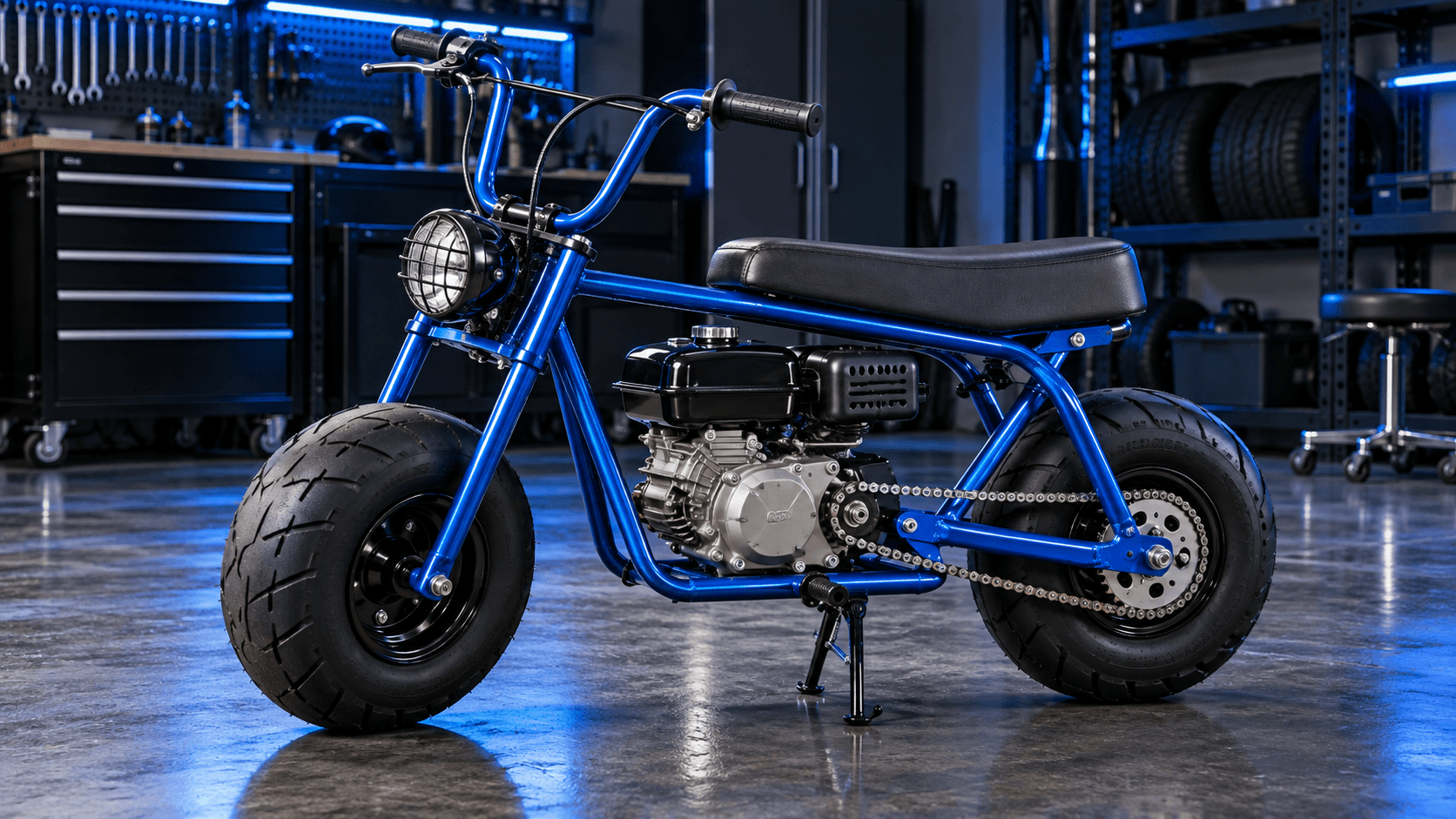
Turn tooth counts into a comparison
Record front teeth, rear teeth, tire diameter and any added reduction. Calculate current and proposed final ratios, then compare their quotient. More reduction gives more ideal wheel-torque multiplication but less travel per engine revolution. It does not guarantee a faster launch when traction or clutch behavior changes.
Rold = rear/front; Rnew = new rear/new frontFollow the worked comparison below for the input units and assumptions.
Work through an example
Changing the rear from 60 to 66 teeth with the same driver increases reduction by 10%. Fixed-RPM speed becomes 60/66 of the original, a 9.09% decrease. This percentage comparison does not require tire diameter.
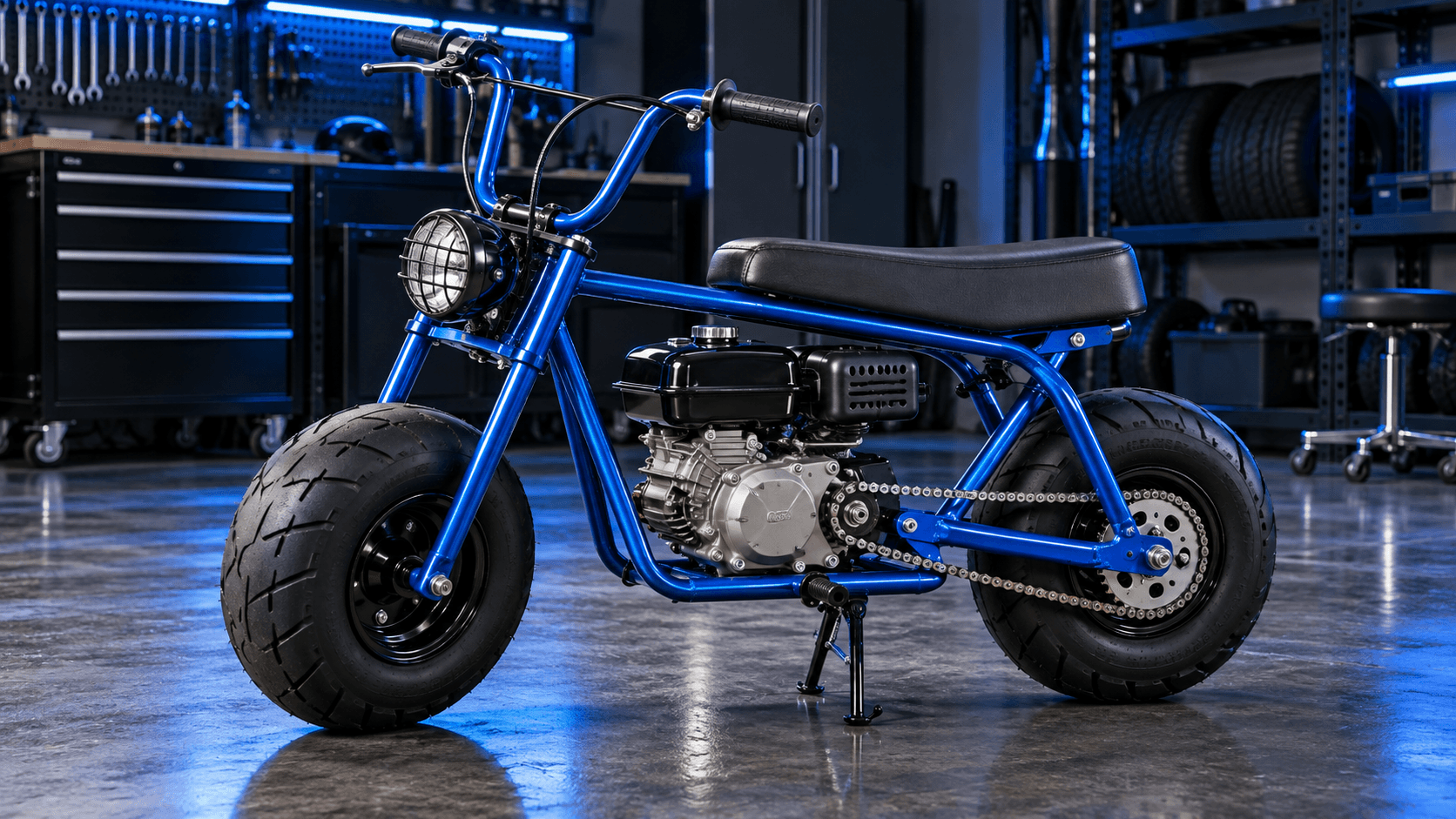
Compare both sprockets as a complete pair
Compute rear/front for the existing and proposed setups. Divide the proposed reduction by the existing reduction to compare ideal torque multiplication at equal engine torque; invert it for fixed-RPM speed. This works even when both sprockets change.
Check fit before interpreting a speed improvement
Sprocket pitch, mounting, chain width, chain path and adjustment travel are separate from the ratio. Calculate the likely chain-length change and consult the actual parts documentation before treating a proposed combination as usable.
Compare a mini-bike sprocket change with a baseline
Use the existing 12/60 pair as a baseline and hold tires and other stages fixed. The table separates a modest rear-tooth change from a larger front-tooth change. A meaningful mini-bike sprocket comparison uses complete ratios, even when the proposed change looks small.
Rold = rear/front; Rnew = new rear/new front- Count the existing driver and driven teeth, and record the ratio.
- Enter the proposed pair and calculate its complete quotient.
- Compare new/old reduction and old/new fixed-RPM speed, labeling both percentage changes.
- Check chain specification, mounting, chain path and available adjustment before treating the proposed pair as a usable option.
| Front / rear teeth | Final reduction (:1) | Reduction change (%) | Fixed-RPM speed change (%) |
|---|---|---|---|
| 12/60 | 5 | 0 | 0 |
| 12/66 | 5.5 | 10 | -9.09 |
| 11/60 | 5.455 | 9.09 | -8.33 |
Changing the rear from 60 to 66 teeth adds 10% reduction. Removing one tooth from the driver adds about 9.09%, a similar but different numerical change. Matching percentage effects do not imply identical articulation, chain length or clearance.
Check the inputs before interpreting a difference
If a proposed setup calculates more speed, ask whether the engine can still reach the same loaded RPM. The spreadsheet comparison assumes equal RPM; it does not determine clutch loading or the torque curve.
Before you apply the result
A new rear sprocket can need another chain length and may affect guards or ground clearance. Check mounting pattern, chain specification and adjustment travel before purchasing components.
Try the calculation
Enter your own values in the related calculators. Compare one input at a time and keep units and operating conditions visible with the result.
Frequently asked questions
Does a smaller front sprocket give more reduction?
Yes, with the same rear sprocket. The proportional change is often larger than a one-tooth change on the rear.
Does adding 10% rear teeth lower speed by 10%?
At equal RPM, speed becomes 1/1.10 of the original, a 9.09% reduction.
Can a sprocket calculator choose my chain specification?
No. Confirm chain and sprocket compatibility from the manufacturer dimensions and application data.
Can I compare a driver change and a rear-sprocket change in the same worksheet?
Yes. Calculate each proposed rear/front ratio against the same original pair. Compare the reduction and reciprocal speed percentages before examining physical fit.
Reference and method
Angular speed and tangential speed. Gear reductions follow tooth engagement and conservation of rotation count.
OpenStax — University Physics: rotation with constant angular acceleration ↗These explanations and examples describe the documented model. No manufacturer testing, named expert authorship or independent professional review is claimed. Read the method policy or report a correction.