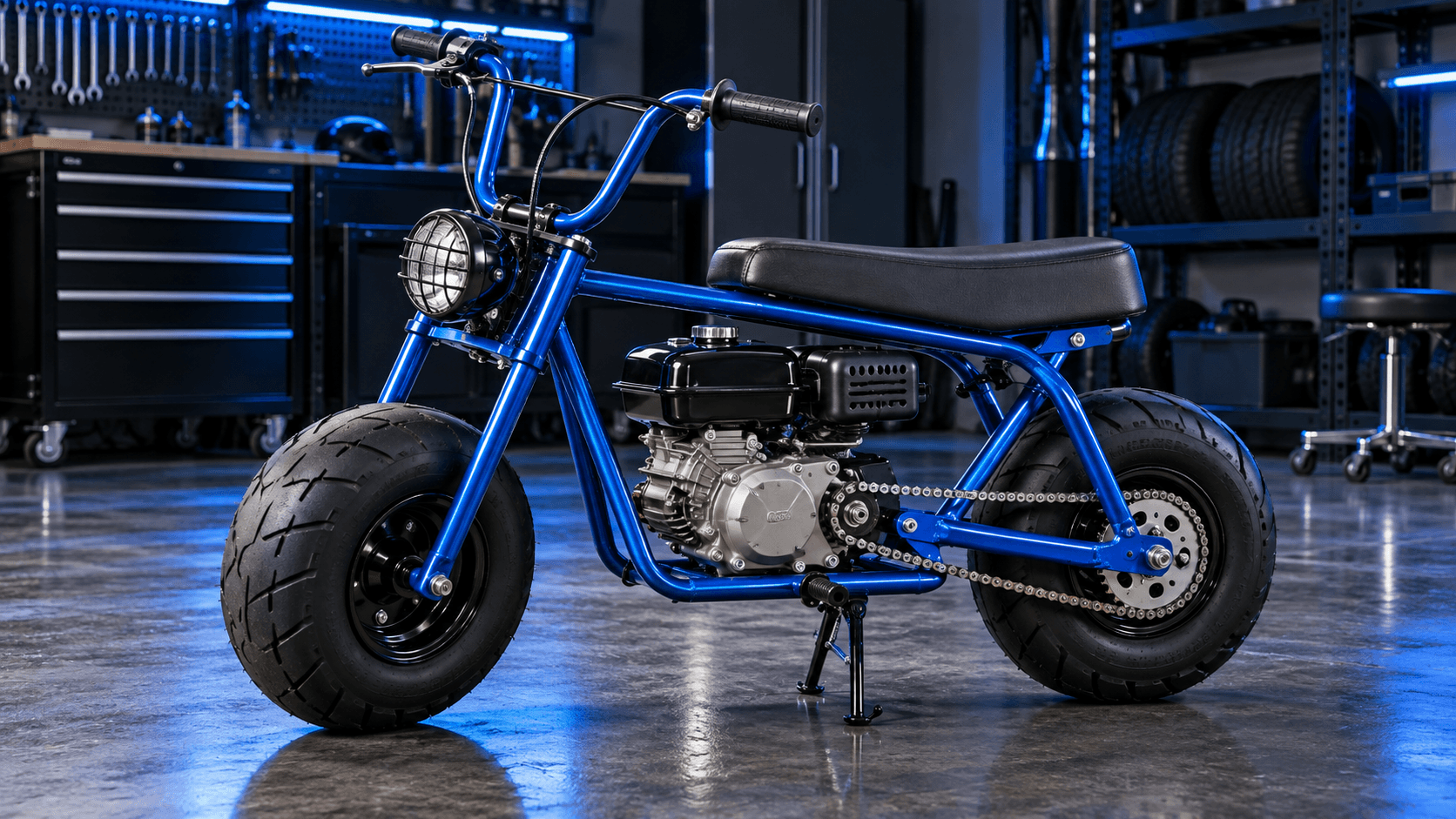
Mini Bike Sprocket
Calculator
Compare mini bike rear-sprocket changes and their effect on reduction, wheel torque multiplication and theoretical road speed at fixed engine RPM.
Your setup
Your results
CalculatedThe ideal torque-multiplication change equals the reduction change. It is not the percentage change in measured acceleration.
Does not check chain length, clearance, chain wrap, tire traction or component compatibility.
How the calculation works
Follow the formula and keep the input units consistent at every step.
R₁ = rear / front; R₂ = proposed / front; reduction change = (R₂/R₁ − 1) × 100%; speed change = (R₁/R₂ − 1) × 100%- Divide current driven teeth by driver teeth.
- Repeat with the proposed driven sprocket.
- Compare the ratios and their reciprocals for the fixed-RPM speed change.
A Worked Example
12/60 gives 5:1. Changing only the rear to 66 gives 5.5:1: reduction increases 10%, while speed at equal RPM falls 9.09%.
What Your Result Means
The ideal torque-multiplication change equals the reduction change. It is not the percentage change in measured acceleration.
Assumptions & Limitations
Does not check chain length, clearance, chain wrap, tire traction or component compatibility.
Common Mistakes
A 10% reduction increase is not a 10% speed decrease. Their relationship is reciprocal.
Questions about this calculation
Which values should I enter?
Divide current driven teeth by driver teeth. A 10% reduction increase is not a 10% speed decrease. Their relationship is reciprocal.
How should I interpret the result’s precision?
Displayed results are rounded for readability. Intermediate calculations retain floating-point precision; extra displayed decimals do not improve your input accuracy.
Can I use metric units?
Yes. Select Metric above the calculator to convert your inputs. Results always state their units. Tire-size designations keep their conventional mm and inch units.
What are the main limitations?
Does not check chain length, clearance, chain wrap, tire traction or component compatibility.
Method, sources & relevant guides
Angular speed and tangential speed. Gear reductions follow tooth engagement and conservation of rotation count.
OpenStax — University Physics: rotation with constant angular accelerationMethod documentation updated October 18, 2026. Independent professional review has not been claimed. Read the calculation and review policy.