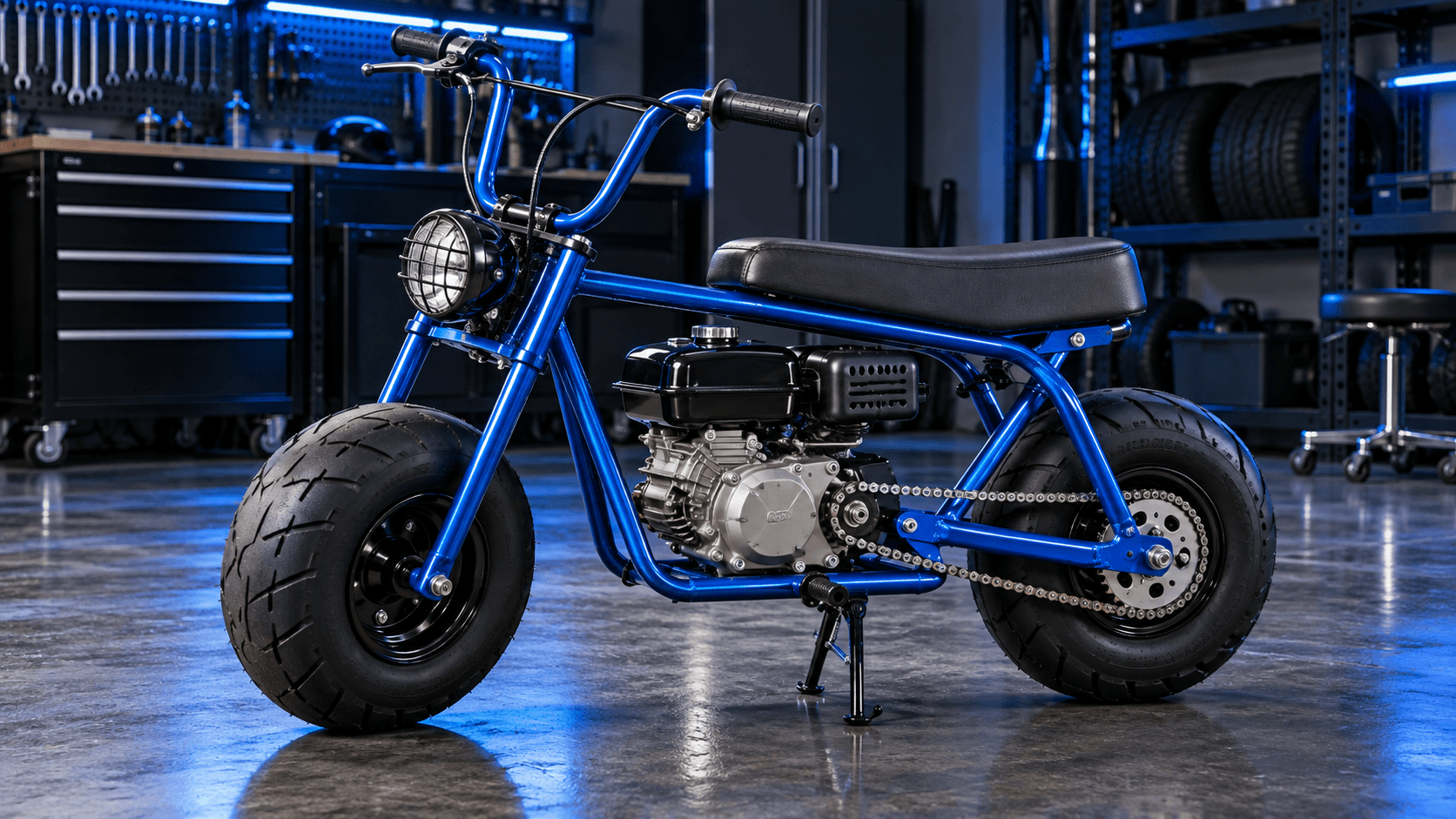
Compare wheel travel as well as gearing
Calculate total reduction through any converter and jackshaft. Then use actual tire dimensions to translate wheel RPM to speed. Two bikes with the same 6:1 reduction but different tire diameters do not travel the same distance per engine revolution. Include rider and terrain conditions when interpreting observations.
Travel per engine turn = tire circumference / overall reductionFollow the worked comparison below for the input units and assumptions.
Work through an example
At equal RPM and reduction, a nominal 19-inch tire gives 19/13 times the geometric speed of a 13-inch tire, about 46.15% more. It also changes the force at the contact patch for a given wheel torque.
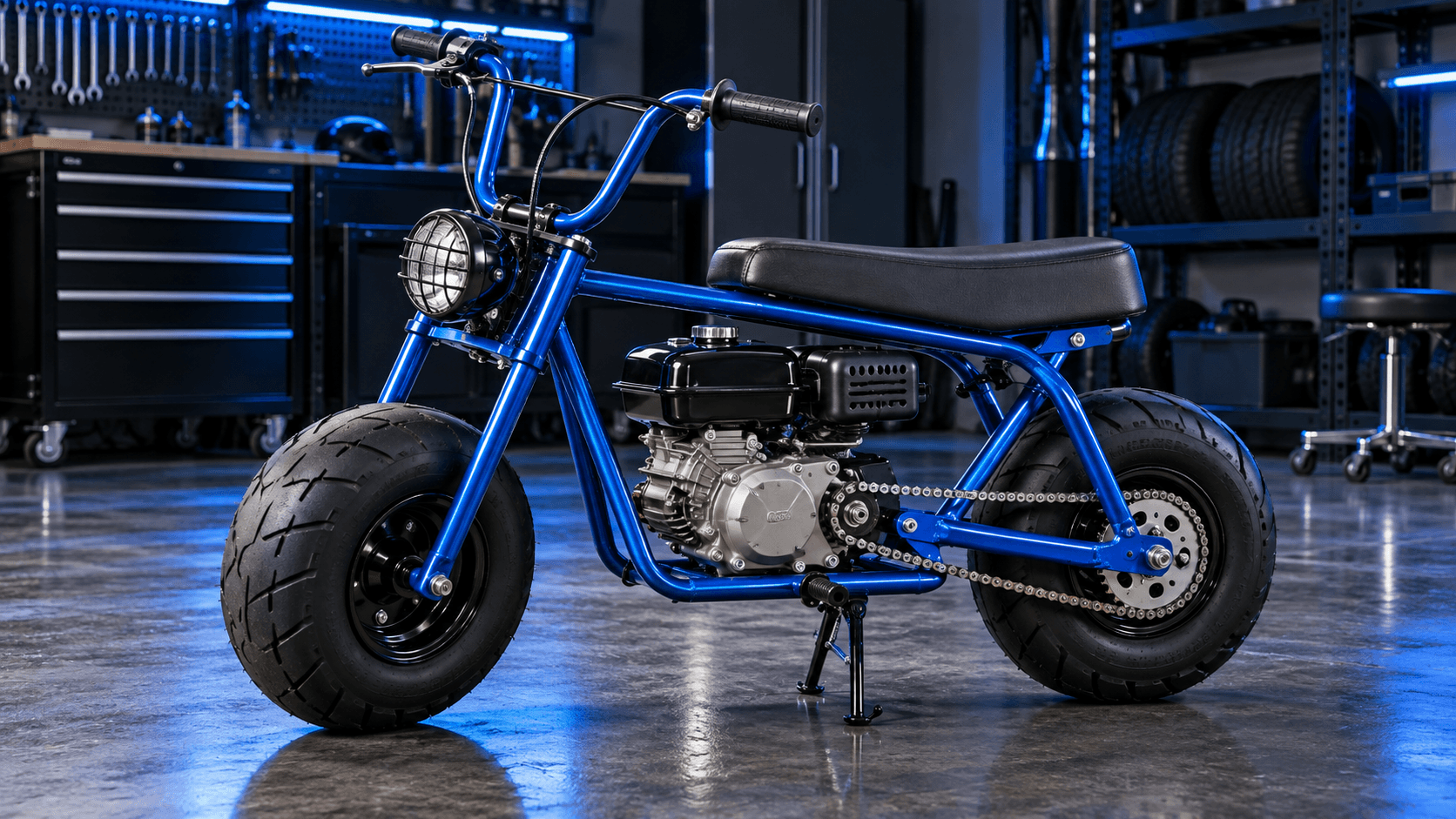
Include tire size when comparing two mini bikes
Equal final reductions produce equal wheel RPM only if the preceding stages and engine RPM match. A larger rolling circumference then produces greater travel per wheel turn. Compare both reduction and wheel travel when describing low gearing for a mini bike.
Keep converter assumptions attached to the result
A mini bike with a belt converter can have different overall reduction at launch and at speed. Record the selected converter ratio alongside sprocket teeth and any jackshaft stages. A chain-only ratio cannot describe both operating conditions.
Compare mini-bike reduction and wheel travel together
A 6:1 ratio describes the RPM reduction but not the distance traveled for each engine turn. The following cases hold reduction and engine RPM at 6:1 and 3,600 while nominal tire diameter changes. Converter and jackshaft stages are assumed already included in the overall reduction.
Travel per engine turn = tire circumference / overall reduction- List the chain, jackshaft and converter stages and calculate their product.
- Record the nominal tire diameter or measured rolling circumference used for the comparison.
- Divide engine RPM by the complete reduction to obtain wheel RPM.
- Compare distance traveled per engine turn before interpreting a gearing label such as tall or low.
| Nominal tire diameter (in) | Wheel RPM | Theoretical MPH |
|---|---|---|
| 13 | 600 | 23.2 |
| 16 | 600 | 28.56 |
| 19 | 600 | 33.91 |
The wheel turns at 600 rpm in all three rows, but a larger tire travels farther each turn. This is why two mini bikes with the same sprocket ratio can have different calculated speeds. The larger tire also changes contact-patch force for a given wheel torque, so the comparison is more than a dashboard number.
Check the inputs before interpreting a difference
Do not treat a tire designation as an exact rolling dimension. Also verify that a nominal chain-only ratio has not been mistaken for the complete engine-to-wheel ratio when a converter or extra stage is installed.
Before you apply the result
A taller tire or taller ratio can overload the clutch or prevent the engine reaching its useful RPM. The calculation does not check frame clearance, brake capacity or component compatibility.
Try the calculation
Enter your own values in the related calculators. Compare one input at a time and keep units and operating conditions visible with the result.
Frequently asked questions
What is the formula for mini-bike final reduction?
Rear sprocket teeth divided by front sprocket teeth. Multiply any other reduction stages for engine-to-wheel calculations.
Will larger tires raise calculated speed?
Yes, at equal engine RPM and overall reduction. They also change the contact-patch force for a given wheel torque.
Is there one best mini-bike gear ratio?
No. Terrain, tire size, engine behavior and drivetrain limits affect the choice. A calculation provides a comparison, not a universal recommendation.
How can two mini bikes with the same gearing have different speed?
They can have different rolling circumferences, engine RPM or converter operating ratios. The tooth-count ratio alone does not determine distance per minute.
Reference and method
Angular speed and tangential speed. Gear reductions follow tooth engagement and conservation of rotation count.
OpenStax — University Physics: rotation with constant angular acceleration ↗These explanations and examples describe the documented model. No manufacturer testing, named expert authorship or independent professional review is claimed. Read the method policy or report a correction.