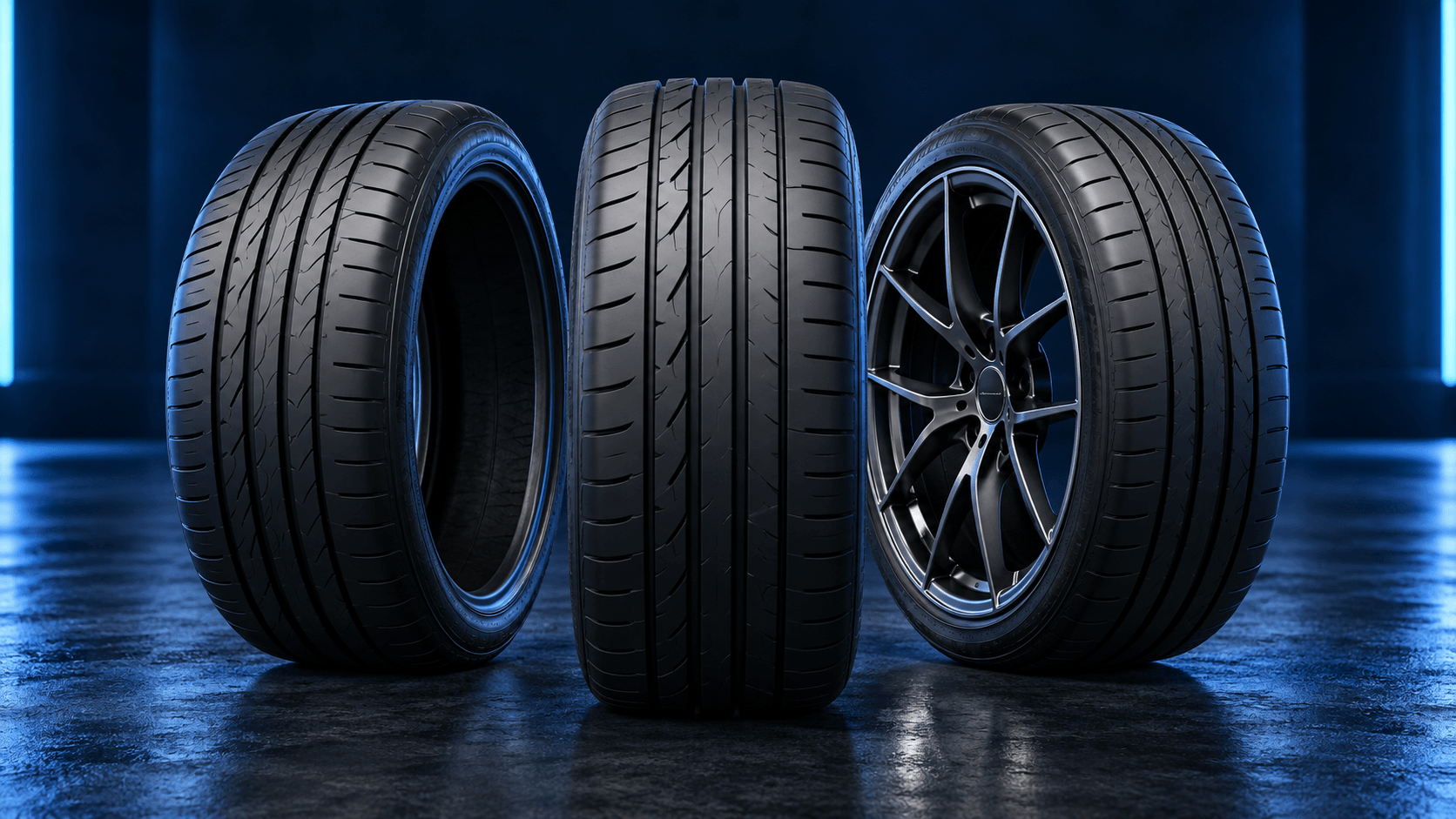
Tire aspect ratio comparison
Hold section width and rim designation constant while varying nominal sidewall aspect ratio. Change an input to explore the relationship.
Input parameters
Set your values below. The table updates automatically.
Comparison results
Geometric comparison is not a fitment recommendation. Load rating, rim compatibility and clearance are excluded.
| Aspect ratio (%) | Sidewall (mm) | Diameter (mm) | Diameter (in) |
|---|---|---|---|
| 30.00 | 61.50 | 529.4 | 20.84 |
| 35.00 | 71.75 | 549.9 | 21.65 |
| 40.00 | 82.00 | 570.4 | 22.46 |
| 45.00 | 92.25 | 590.9 | 23.26 |
| 50.00 | 102.5 | 611.4 | 24.07 |
| 55.00 | 112.75 | 631.9 | 24.88 |
| 60.00 | 123 | 652.4 | 25.69 |
| 65.00 | 133.25 | 672.9 | 26.49 |
| 70.00 | 143.5 | 693.4 | 27.30 |
How this table is calculated
diameter = rim × 25.4 + 2 × width × aspect/100 (mm)Rows use the same assumptions while varying the value in the first column. Input-unit controls change the units used to enter values; column headers always state the output units.
How to read this comparison
Section width in millimeters and rim designation in inches remain fixed. The varying aspect ratio is a percentage of section width, not a percentage of the complete tire diameter.
A worked example with the initial inputs
With initial 205 mm width and a 16-inch rim, the 55% row has 112.75 mm nominal sidewalls. Diameter is 16 × 25.4 + 2 × 112.75 = 631.9 mm, approximately 24.878 inches.
The live table changes when you edit its controls.
Use the interactive calculator to explore more scenarios, units and relevant inputs.
Frequently asked questions
Can this comparison confirm that a tire will fit?
No. Nominal geometry does not check rim suitability, load rating, clearance or actual loaded rolling dimensions. Use the vehicle and tire specifications for those decisions.
Why do input controls and column headers show different units?
The unit toggle changes how you enter dimensional inputs. Each output column keeps its stated unit so you can compare values consistently. Read the column header before copying a result.
Understand the method in more detail

Source and assumptions
Angular speed and tangential speed. Gear reductions follow tooth engagement and conservation of rotation count.
OpenStax — University Physics: rotation with constant angular accelerationRead the calculation methodology for model scope, unit conventions and review status.